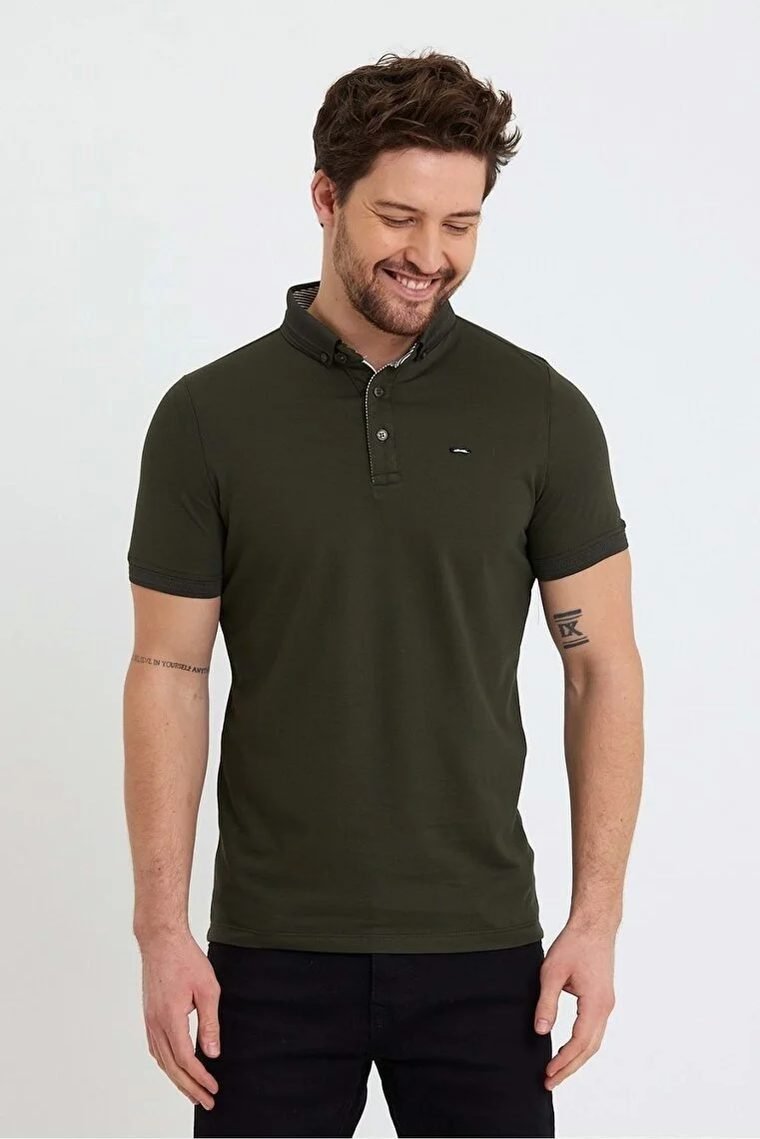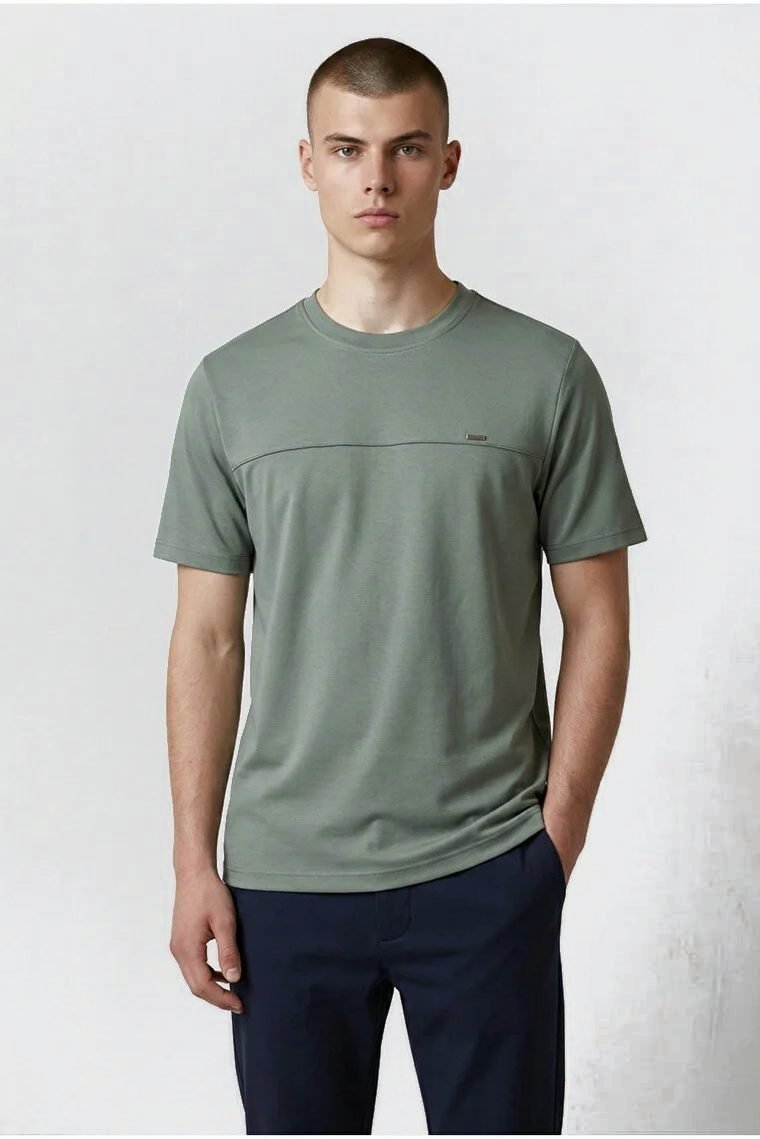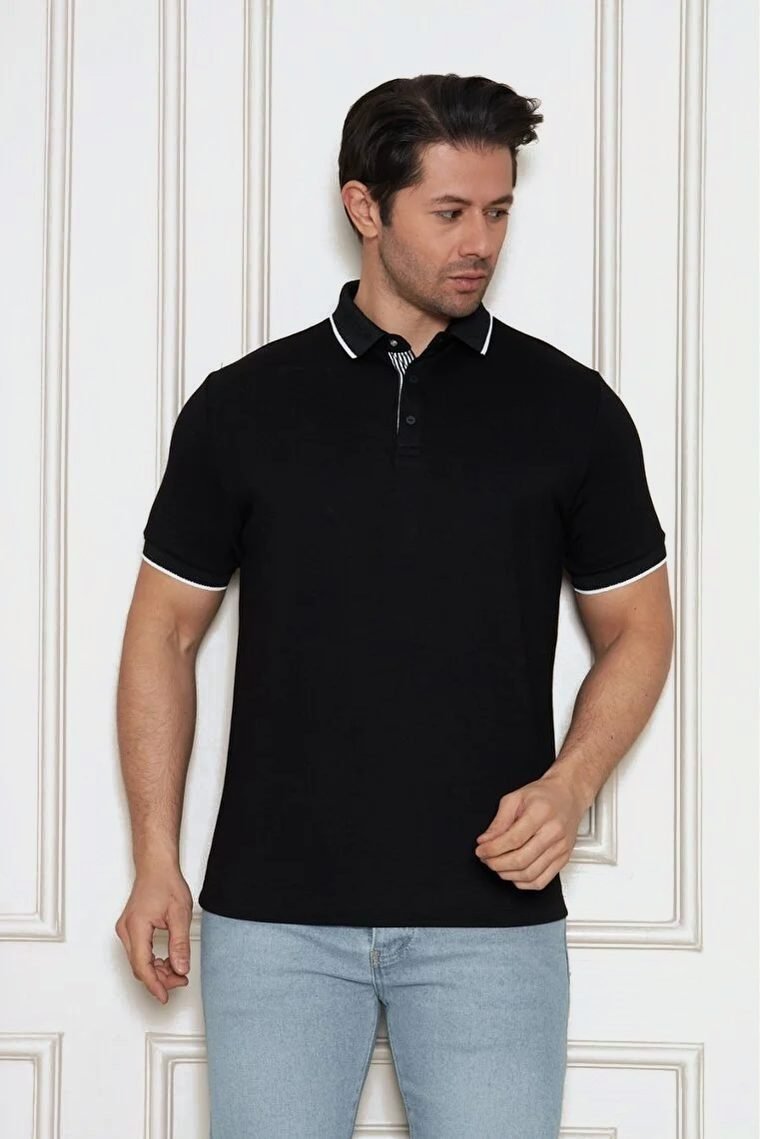
A polo shirt usually starts to age at the collar, not the body. If the body is still sound but the collar has gone wavy, that garment stops being worn. Three details decide this outcome, and all three are settled during production.
The structure of the rib
The collar is a rib piece knitted separately from the body. The density of that piece and the quality of its yarn directly decide how many washes the collar will keep its shape through. A loosely knitted rib feels soft and comfortable on first try, but widens after a few wears. A densely knitted rib feels a little stiff at first, but in return it lasts.
Seam tension
The tension applied while attaching the rib to the body is critical. A collar sewn too tight puckers in the first wash and the neck opening narrows. A collar sewn too loose ripples. Because the right point changes with the stretch of the fabric, it has to be reset for every line; sewing all models with one standard machine setting causes trouble here.
What ruins a collar is usually not the fabric, but a stitch setting that does not match the fabric.
Placket and button placement
The placket at the front of the collar decides how the collar sits when open. If the placket is too short, the collar falls to both sides when open; if it is too long, the chest line is disturbed. Even button spacing is also visually noticeable. On garments where the buttonholes are not finished with clean stitching, the edges of the holes open up after a few wears.
How to check it as a buyer
When you pick up the sample, pull the collar gently with both hands and let go: if it returns to its old state, the rib is good. Lift the collar and release it; it should stand upright on its own. Open and close the placket; the buttons should pass without forcing. These three checks take a minute and can change a season's return rate.