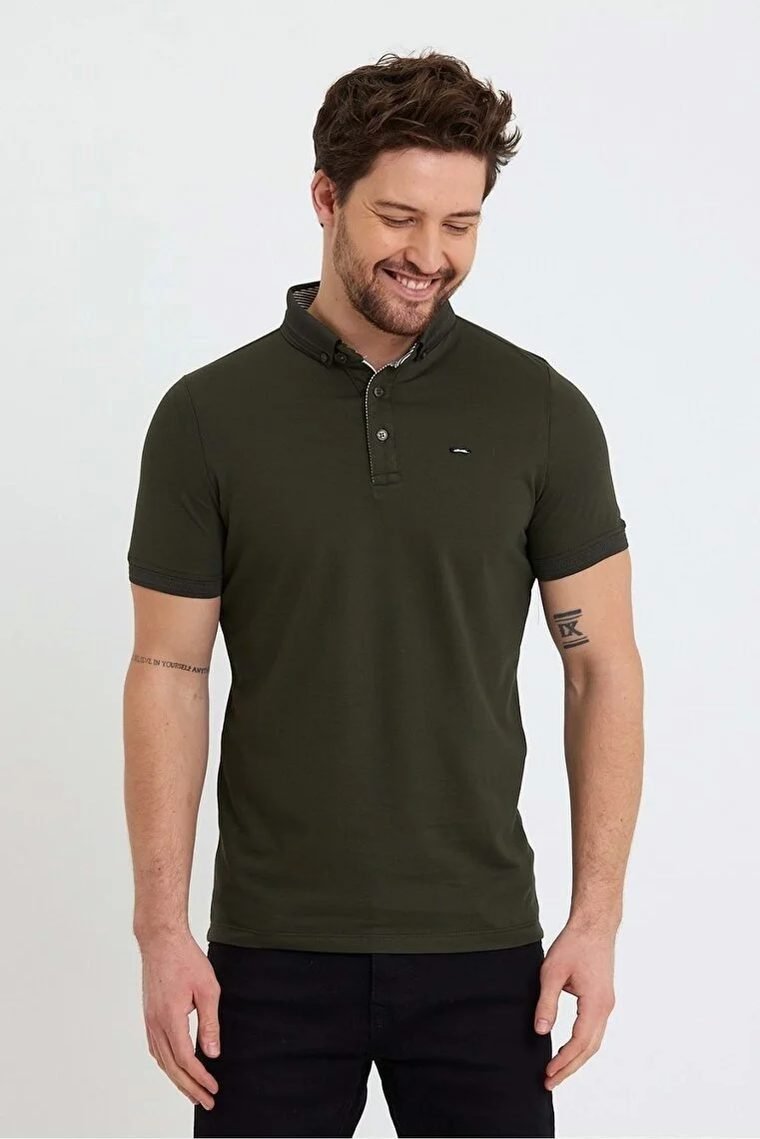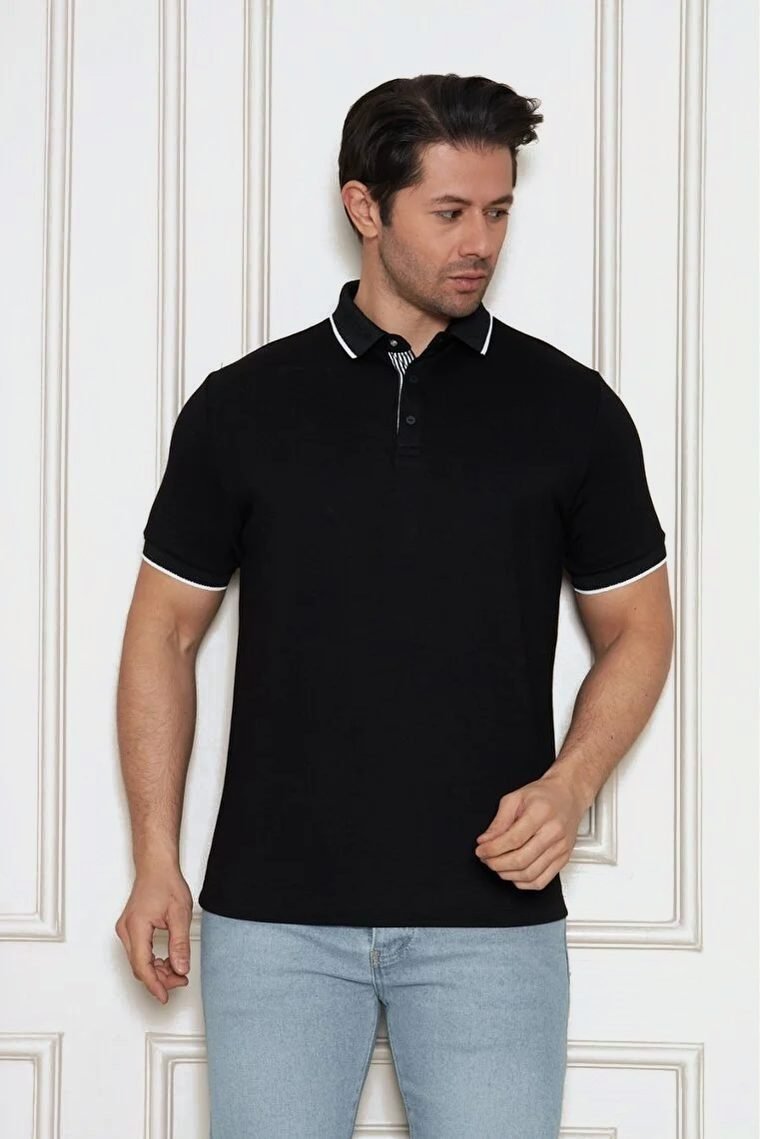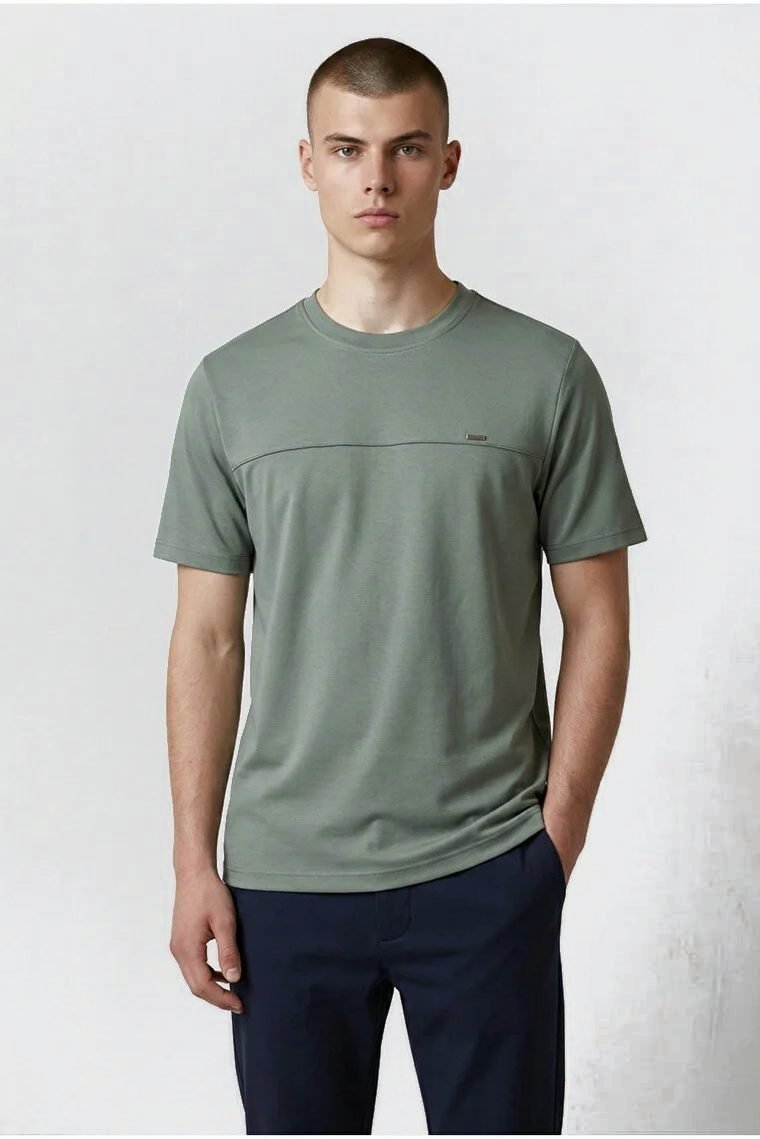
Linen is a popular choice in summer collections, but pure linen is demanding in practice. It is strong on coolness and natural appearance; in return it creases quickly and needs constant pressing. Blends made with viscose offer a balanced middle path between these two extremes.
What the blend changes
Viscose gives the fabric drape and softness. Linen gives coolness and body. When the two come together, the resulting fabric creases noticeably less than pure linen and sits more fluidly on the body. In a tee worn all day through summer, that difference is clearly visible by the evening hours.
The role of elastane
When a small amount of elastane is added to the blend, the fabric can stretch and return to its old state. This particularly prevents the neck area from widening on crew neck models. However, as the elastane ratio rises the drape of the fabric stiffens and the natural look is lost; the ratio therefore has to stay at a level that does not disturb the character of the fabric.
Elastane is not a solution but a setting. Too much of it erases the natural look linen provides.
Care
Viscose-linen blends like being washed at low temperature. High heat lowers the strength of viscose and the fabric can thin over time. Line drying instead of a tumble dryer makes a clear difference in keeping the garment's measurements. Passing this information to the customer on the product label and in store lowers the return rate.
Which models it works on
It gives good results in crew neck essentials and quarter-zip collar models. On polo collars, piqué knit is still preferred because it provides a more upright collar. In summer capsule collections, using the two together makes it possible to build a set that is both cool and shapely.